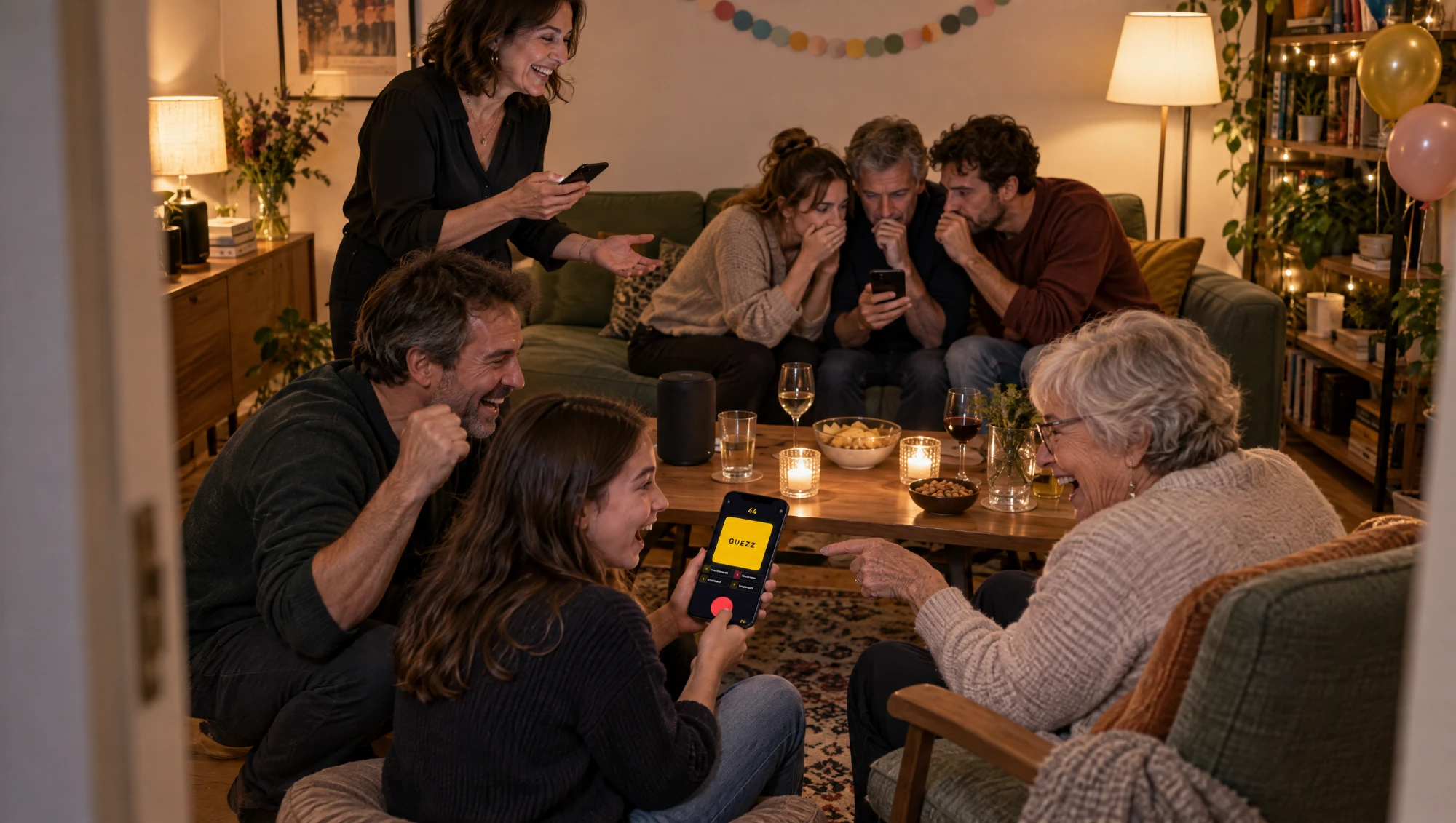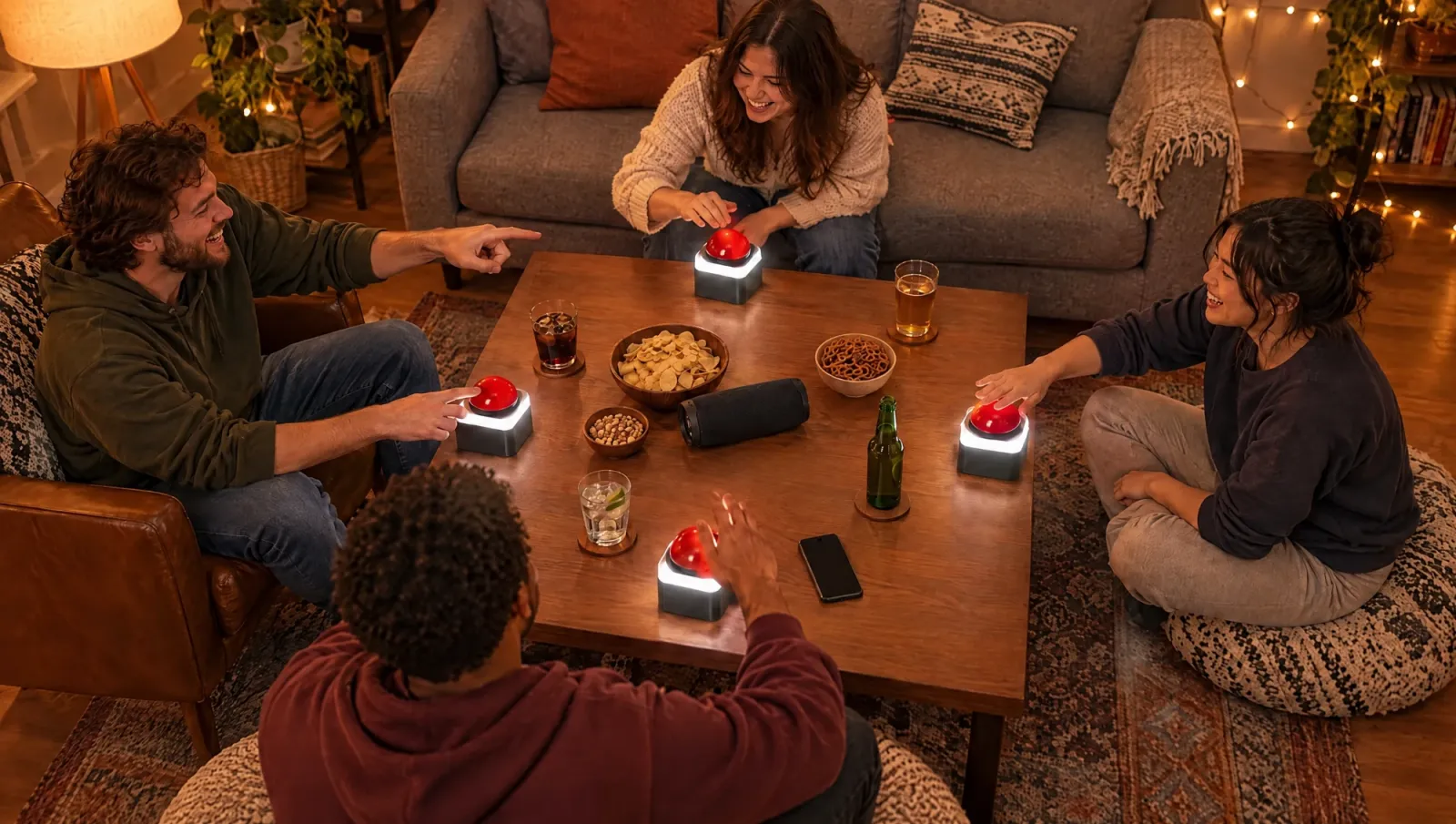
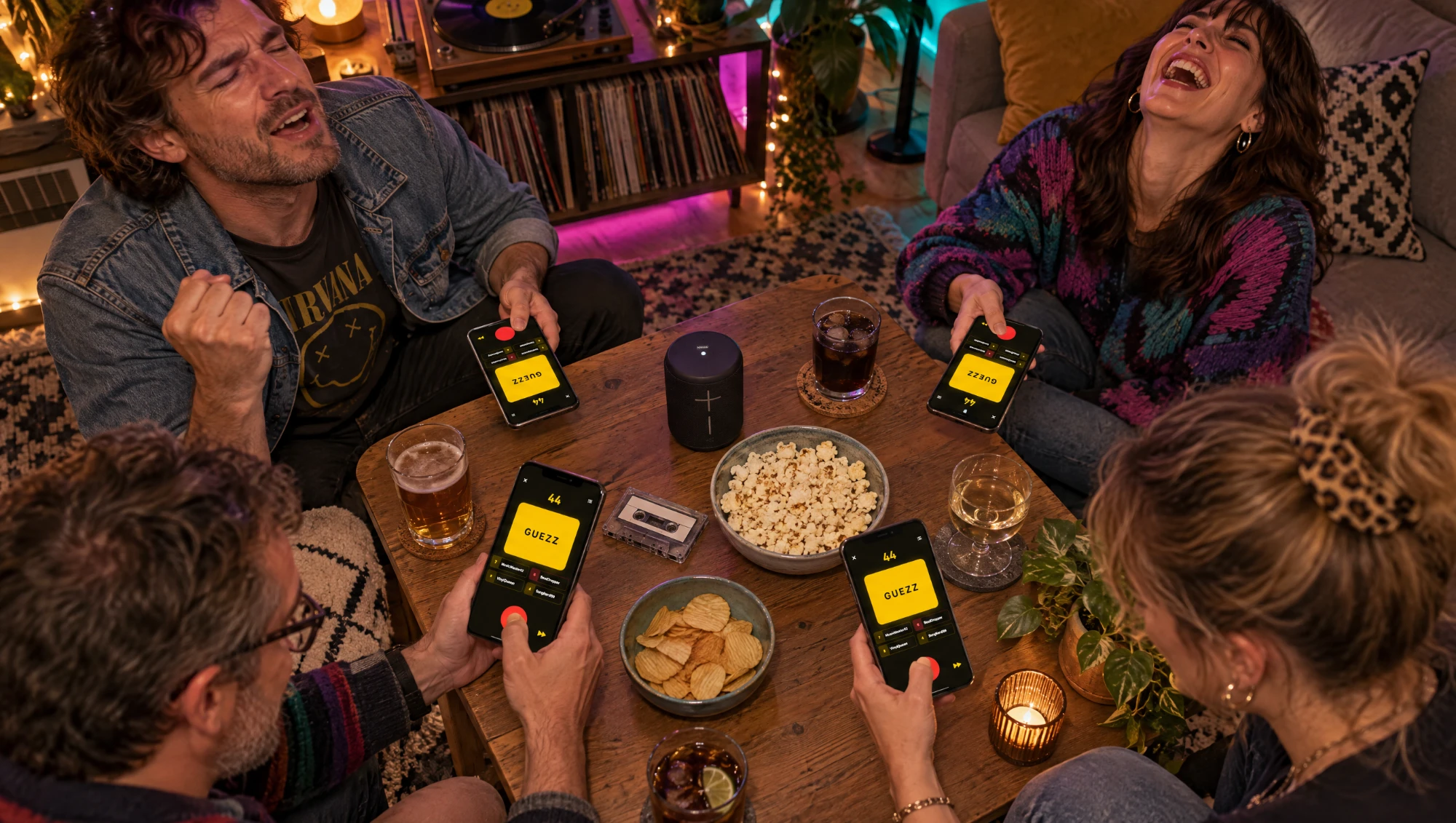
Every group has a decade. The one where most of you were teenagers, where the songs are burned in so deep that two seconds of a synth intro is enough. Play that decade at a game night and something happens: people stop being polite. They lean forward. Somebody starts singing before anybody has buzzed.
That is why the 80s music quiz and the 90s music quiz are the classic theme nights. This post is about how to host one that works: which decades to pick for your room, which rules to set, and how to keep the energy up past the tenth song.
Why a decades night beats a random playlist
A random playlist across 60 years of music is fair, but it is flat. Half the songs belong to somebody else's childhood, and the race turns into one person answering while everyone else waits.
A decades night fixes that in three ways:
- Shared memory. Everyone in the room knows the same songs, so every buzz is a real race.
- Built-in theme. You can dress it up with neon, cassettes and bad hair, or not at all. The music carries it either way.
- Fair difficulty. Deep cuts from your decade are still fair game, because people actually lived through them.
The trick is matching the decade to the room.
Pick the decade for your room
Before anything else, look at who is coming.
- Everyone roughly the same age. Pick their teenage decade and only that one. Born in the early 70s? That is the 80s. Early 80s? The 90s. Tight races, loud arguments.
- Mixed ages, like a family evening. Pick a range, not a single decade. The 80s to the 2000s gives parents and kids their own songs, and nobody sits out for long.
- Music nerds. Go one decade older than their comfort zone. A room of 90s kids playing the 70s is humbling, and it is great fun.
- You cannot decide. Play two short games back to back: one 80s, one 90s. Then let the winner of each pick the decider.
How to set it up in Guezzer
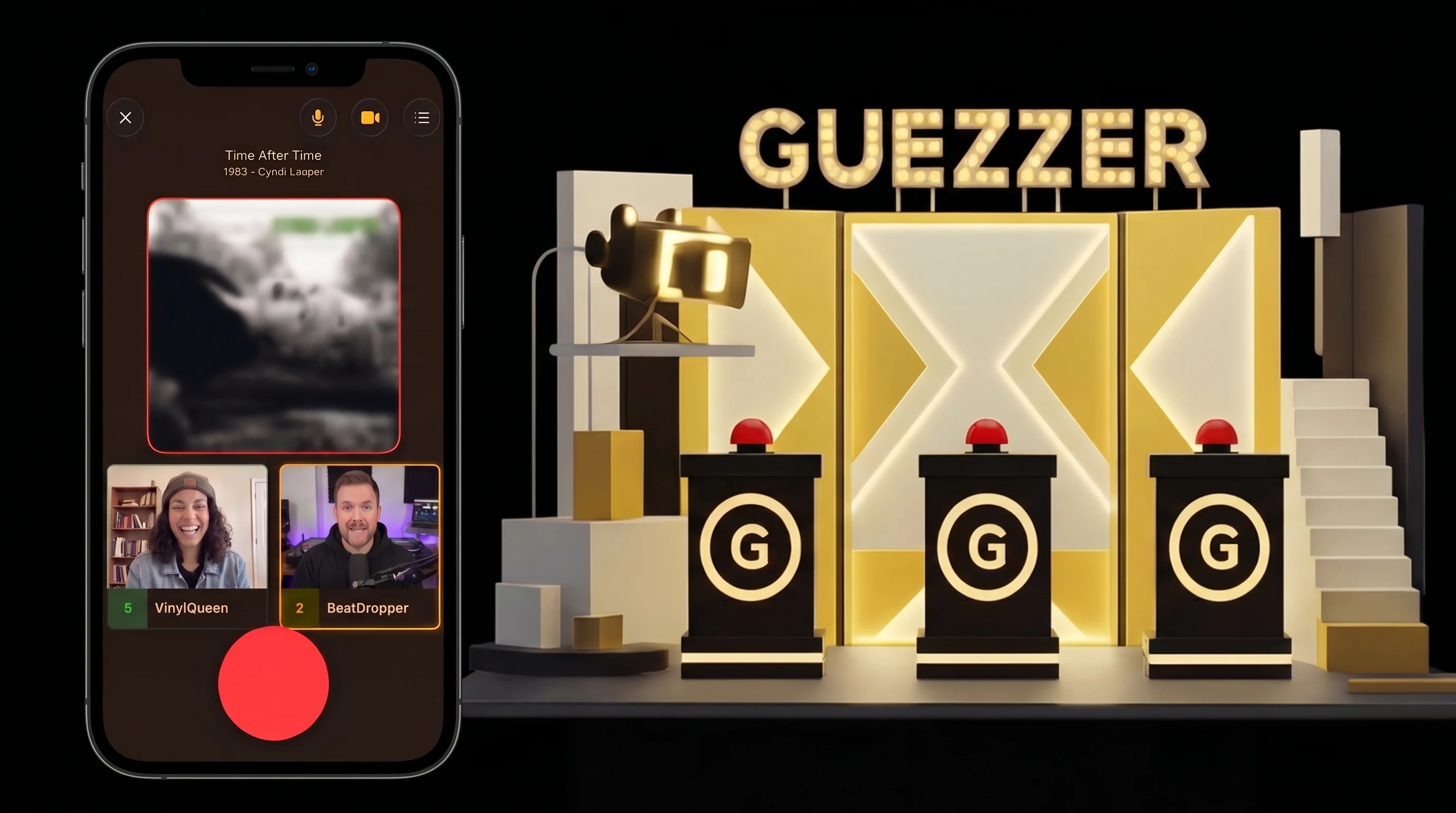
Guezzer is the music quiz app we make, and a decades night is one of the things it does best. The host needs an iPhone with an active Apple Music subscription, because the songs play from that phone. Everyone else joins on their own phone, iPhone or Android, and their screen becomes a big red buzzer. The basics are in how to play Guezzer.
For a decades night, the part that matters is the Mix tab in the lobby:
- Drag the decade slider. It runs from the 60s to the 2020s with two handles. Pull both onto the 80s for a pure 80s quiz, or spread them from the 80s to the 90s for a wider night.
- Add genres if you want a sharper theme. Rock only for an air-guitar evening, pop only for a sing-along crowd. Leave them all on for the full decade.
- Set the language filter if your group wants songs in one language only.
- Check the track counter. It shows how many songs match your selection, so you know the pool is big enough for the night.
Then friends scan the code, you pick the rules, and the first song starts.
Rules that work for a decades night
Guezzer asks the host for a few settings in the lobby. For a themed night, these are the ones we would pick:
- Title and artist. Title only is too easy when everyone knows the decade. Making people name the artist separates the fans from the people who just hum along.
- Seven correct to win. Long enough for a comeback, short enough for a rematch in another decade.
- Manual evaluation between friends. The buzzing player sees the correct answer and judges their own guess. For a group that wants a referee, turn on the Game Master setting and let one person run the show like on TV. More on that in our post about hosting a music quiz game show.
One thing to know: in Guezzer you name the song, not the year. The decade range decides which songs play, the race is about recognizing them first. If your group is into putting songs in the right year, that is what Hitster does, and we compare the two honestly in Guezzer vs Hitster.
Keep the energy up
A decades night peaks early. Everyone knows the first few songs and screams the answer. Then the pool gets deeper and the room gets quieter. A few tricks:
- Short games, many of them. Five correct to win keeps rounds quick. Three short games feel better than one long one.
- Switch decades between games. Went 80s? Go 90s next. The change in sound wakes everyone up.
- Loser picks the next range. Revenge rounds are the best rounds.
- One speaker, loud. The host's phone plays the music, and a speaker in the middle of the table makes sure the person in the corner has a fair chance.
- Snacks away from the speaker. You will thank us.
If one person wins every round, give them homework: a few Training sessions in a decade they do not know, and a rematch next week.
Quick checklist before guests arrive
- Host iPhone with Apple Music, charged
- Speaker tested at full volume
- Decade range picked for the people who are coming
- Rules decided: title and artist, seven to win
- Guests told to install Guezzer before they arrive
- A second decade ready for the rematch
Guezzer is free, and local games with up to four contestants are free. For a bigger group you need Guezzer Pro. A game holds up to 10 players.
The honest one-liner
A decades night works because everyone in the room shares the same soundtrack. Pick the decade that belongs to your group, make them name the artist, and keep the games short. Then drag the slider one decade over and do it again.